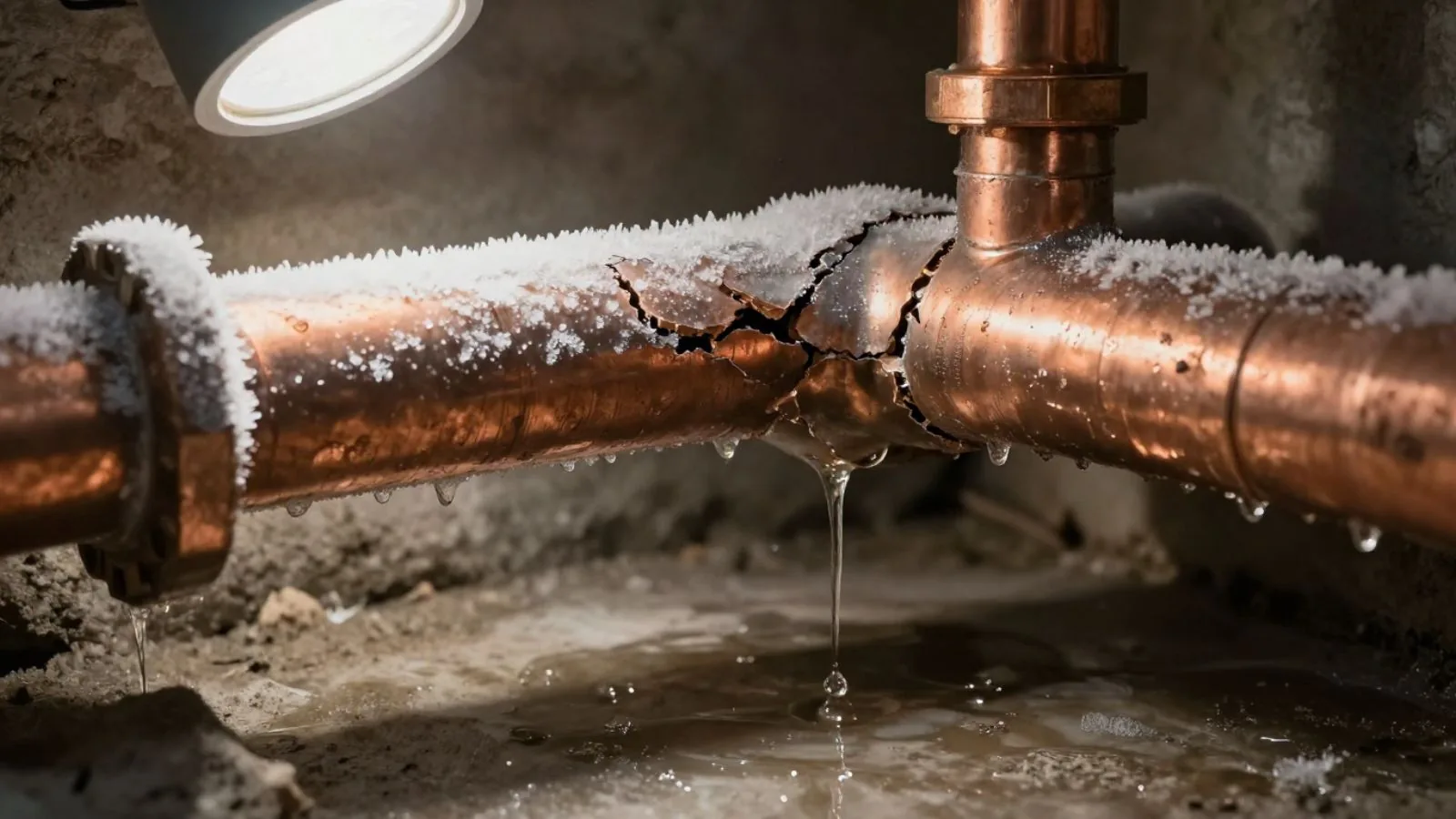
Emergency Frozen Pipe Damage Restoration in Sachse, TX
A pipe that froze overnight often leaks only after the thaw. We answer 24/7 for thaw leaks, wet ceilings and soaked floors across Sachse and nearby towns.
The pipes in a Sachse house are not built for a long freeze, and the damage often shows up when the weather turns. Water expands as it turns to ice, which can crack a pipe or split a joint. The break stays plugged by ice until the thaw lets water through.
This page is about the water that follows a freeze. A sudden failure that has nothing to do with cold has its own page on burst pipe water damage.
How freezes hurt Sachse homes
Freezes are not an everyday event here, but they do happen. The National Weather Service normals for DFW show an average January low near 36 degrees, with a first freeze around late November and a last around mid March. Most winters bring a few hard nights, and a few bring a long freeze.
The February 2021 freeze is the one people remember. DFW dropped to minus 2 degrees on February 16, and the NWS recorded 139 hours at or below freezing from February 13 to 19. The North Texas Municipal Water District, which sells treated water to Sachse, asked customers to cut use from February 17 through 25.
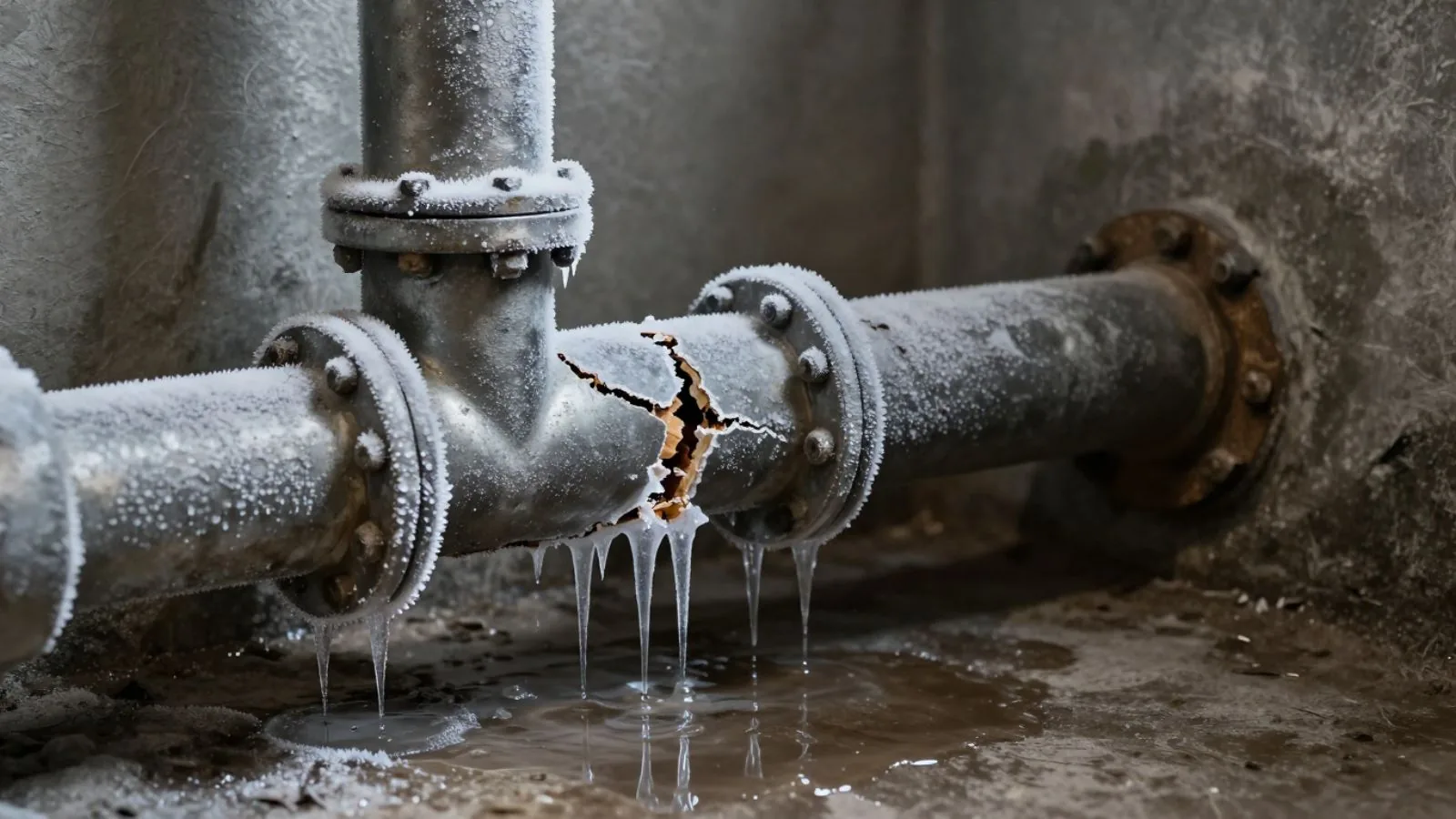
What you see and what it means
- No water or a trickle from a faucet after a cold night. A pipe may be frozen, and the one that froze may already be cracked.
- Frost or ice on an exposed pipe. The section is at risk and so are the fittings next to it.
- A ceiling stain that appears after the temperature rises. A thaw leak is feeding water into the cavity above.
- A sound of running water with every tap closed. A split line is now open.
- A wet garage wall or utility closet. Pipes in unheated spaces freeze first.
First-hour safety steps
- Shut the main valve before anything thaws. It limits what a split pipe can release.
- Open faucets on the lowest floor once the main is closed, so the line can drain.
- Keep clear of wet outlets and the panel. Call 911 or the electric utility for any electrical risk.
- Avoid open flame, torches and high-heat tools. They can start fires and weaken the pipe.
- Call a plumber and our line together. The plumber fixes the pipe, and we dry what got wet.
- Photograph frost, splits and wet areas before anything is moved.
How we restore after a thaw leak
Thaw leaks hide, so the visit starts with moisture meters and a thermal imaging camera to trace water through ceilings and walls. Standing water is pulled out with portable extractors. Wet carpet pad and insulation come out when they are too wet to save.
Air movers and low-grain refrigerant dehumidifiers then dry the structure until readings match a dry reference. Wall cavities are dried through small openings when needed. The work follows the ANSI/IICRC S500 water damage standard, and each reading is logged so progress is visible.
What changes the cost
How long the pipe leaked before it was found, how many rooms were reached, whether the water got into an attic or wall cavity and what the surfaces are made of all shape the job. Cold weather also affects drying, since equipment has to heat and dry the air at the same time.
A technician explains scope and price before work starts, and drying days follow readings.
Frozen pipes and your insurance
The Texas Department of Insurance explains that standard homeowners coverage usually responds to sudden and accidental water damage and not to gradual leaks. A pipe that freezes and bursts is often treated as sudden.
Document the cold snap, the pipe and the damage, and report the loss without delay. Ask your insurer about freeze conditions in your policy.
Mistakes to avoid
- Assuming the pipe is fine because it thawed. A cracked pipe can leak the moment the ice clears.
- Using a heat gun or torch. They can damage the pipe and start a fire.
- Letting a ceiling stain sit. Water trapped above can release suddenly.
- Leaving the house unheated during a hard freeze. Pipes in cold walls are the first to split.
- Skipping the check on pipes in the garage, attic or exterior walls. They freeze first.
Where we work and what follows
After the plumber repairs the pipe, water mitigation explains drying and water damage repair covers rebuilding ceilings and floors. Crews serve Sachse ZIP 75048 along with Wylie and Lavon.
Frequently asked questions
Yes, the line runs 24/7 including nights, weekends and holidays. During a regional freeze many people call at once, so dispatch asks which rooms are wet and whether water is still running to decide what goes first.
No arrival time is promised. Close the main valve, keep power off in wet rooms and call (972) 945-2885.
Ice can crack a pipe or split a fitting, but the ice itself plugs the opening. When the temperature rises and the ice melts, water flows through the damaged spot.
That is why a quiet house at midnight can become a flooded one by morning. Treat any pipe that froze as damaged until a plumber has checked it.
A slow, gentle warm-up with the faucet open is safer than open flame or a high-heat tool, which can damage the pipe or start a fire. If the pipe has already split, thawing only starts the leak.
Shut the main valve first if you can reach it. A plumber can confirm whether the pipe is intact before the water is turned back on.
Fiberglass insulation that has soaked is usually removed. Drywall that is not swollen and has intact seams can often be dried in place, and a technician confirms that with moisture readings.
The EPA guidance on water-damaged buildings uses the same approach, sorting materials by how they respond to drying.
Texas homeowners policies often treat sudden bursts as covered and gradual leaks as excluded, according to the Texas Department of Insurance.
Take photos, save receipts and read the policy language about freezing.
Water spreading right now? Call the 24/7 line
A restoration crew can be sent to Sachse and nearby towns around the clock. Tell dispatch what happened and what you can see.
☎ Call (972) 945-2885