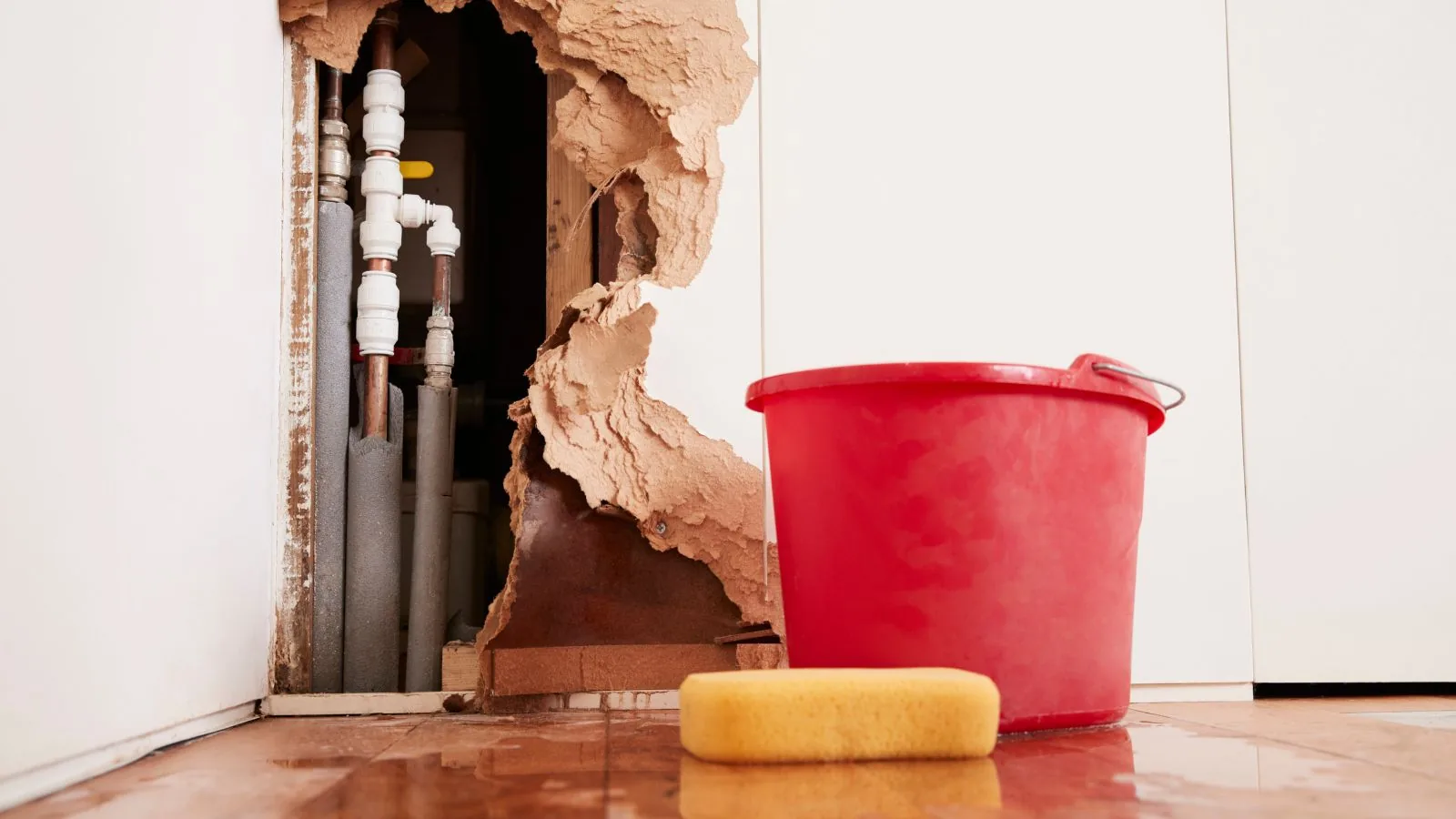
Emergency Burst Pipe Water Damage Cleanup in Sachse, TX
A split supply line can soak a whole floor before anyone is awake. Our 24/7 line sends a crew to pull the water out and dry the walls while your plumber fixes the pipe.
When a supply line bursts, the house is working against you from the first minute. Water at pressure does not stop on its own, and it travels through walls, ceilings and floor cavities long before it shows on the surface. The first goal is to close the valve, and the second is to get a crew moving while the plumber is still on the way.
This page covers cleanup after a pipe splits under pressure, such as a failed fitting, a cracked line or a connector that gave out. Water that came from a freeze has its own timeline, which our frozen pipe water damage page explains.
How a burst pipe happens in Sachse homes
Most supply lines fail at a joint, a fitting or a point where the pipe is stressed. Age, corrosion, pressure swings and bad connections all play a part, and so does a hard winter night. In many slab-on-grade houses the supply lines run through walls and attic space instead of a basement ceiling, so a failure can drop water through a ceiling or run down inside a wall.
The Census Bureau reports that about 84.7 percent of Sachse homes are owner-occupied. That means most burst pipes here land on the owner, who has to stop the water, call a plumber and deal with the insurer in one stressful hour.
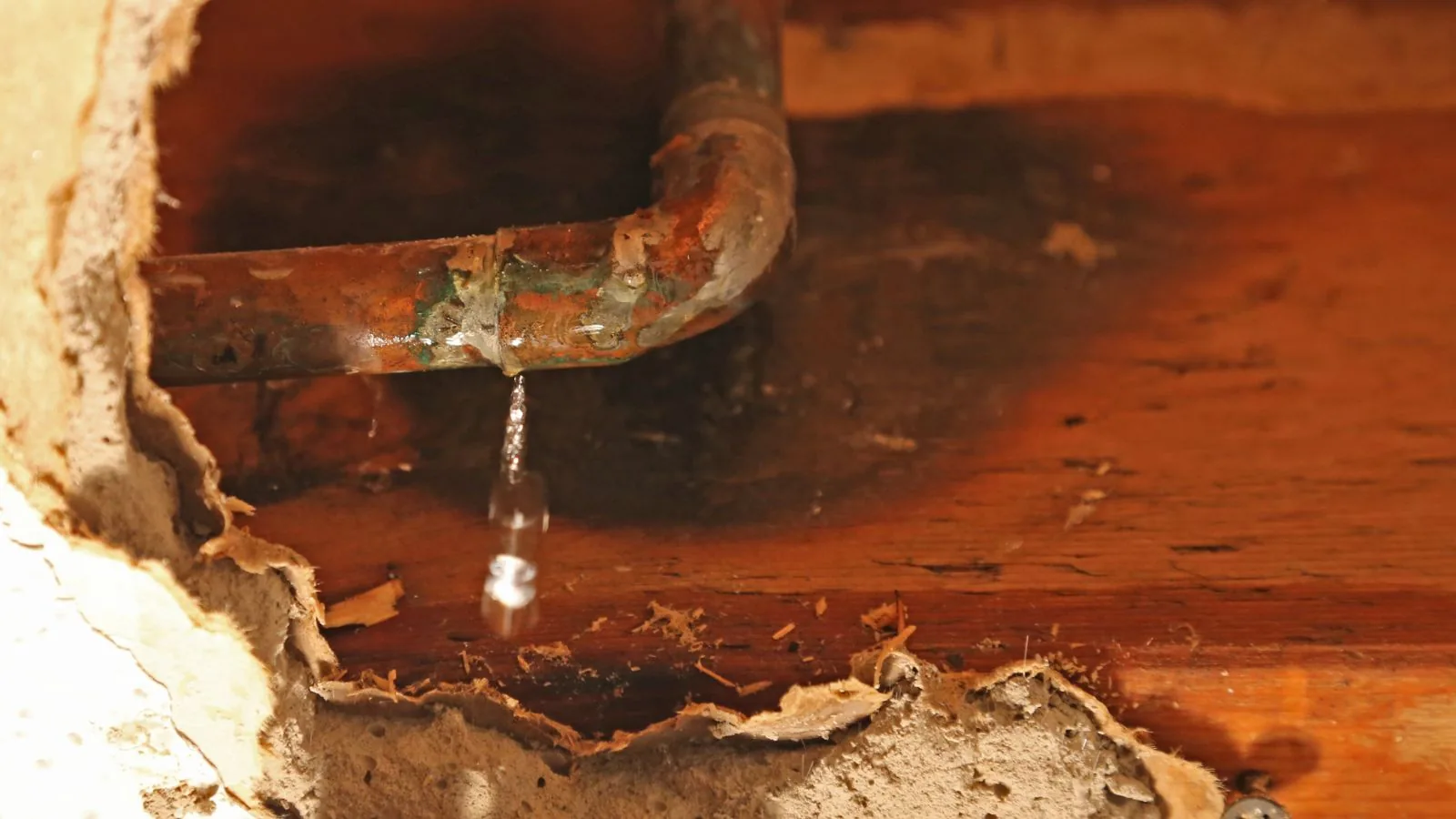
What you see and what it means
- A ceiling stain that spreads. Water is collecting above, so keep clear of any bulge and call right away.
- Warm, humid air and a damp smell. Water has soaked insulation or drywall even if the floor looks fine.
- A hissing or running sound with every tap closed. A line is open somewhere, so shut the main valve and listen again.
- Paint bubbling or baseboards lifting. Moisture has wicked into the wall and will keep spreading.
- A water bill that jumps. A hidden leak may have run for days before anything showed.
First-hour safety steps
- Shut the main valve. It is usually where the line enters the house, often in a garage or utility closet.
- Open the lowest faucet. This drains the pressure left in the line and slows the flow.
- Treat wet electrical as dangerous. Do not stand in water that reaches outlets, cords or the panel. Call 911 or the electric utility for any electrical concern.
- Cut power to the wet room only if the breaker panel is dry and reachable.
- Call a plumber and our line. Both calls can happen at once.
- Photograph everything before it is moved. Include the pipe, the wet floor and any damaged belongings.
How we handle a burst pipe
A technician begins with moisture meters and a thermal imaging camera to find where the water traveled. Standing water comes out first with portable extractors and submersible pumps. Wet carpet pad is lifted or removed, and baseboards come off so the wall bases can breathe.
Air movers and low-grain refrigerant dehumidifiers then run until the readings match a dry reference. Wall cavities that stay wet may be dried through small openings. The technician records each reading so you can see the structure move toward dry, and the reference for this work is the ANSI/IICRC S500 standard for water damage restoration.
What changes the cost
The factors are how long the water ran, how many rooms and floors it reached, what the floors and walls are made of, and whether the water stayed clean. Carpet, pad and insulation absorb more than tile. Access also matters, because a wet wall cavity takes more work to dry than an open floor.
The number of drying days follows moisture readings, not a calendar. A technician explains the scope and price before work starts, and you decide whether to go ahead.
Burst pipes and your insurance
The Texas Department of Insurance describes sudden and accidental water damage, such as a burst pipe, as the kind a standard homeowners policy often covers, and gradual leaks as usually excluded. Policies differ on the cost of repairing the pipe itself and on how they treat the walls, so read the water damage section or ask your agent.
Report the loss quickly and keep your photos, moisture readings and receipts. Insurers often expect you to take reasonable steps to stop further damage, which is what extraction and drying do.
Mistakes to avoid
- Waiting for the plumber before pulling water out. The structure keeps absorbing while you wait.
- Turning the water back on before the repair is done. The line should hold before it is pressurized again.
- Throwing out wet materials before taking photos. Your insurer may ask what was lost.
- Running a household vacuum on wet carpet. It is not built for water and creates an electrical risk.
- Ignoring a stain that shows up days later. Slow seepage can keep feeding the same wall.
Who we serve and what comes next
After the plumber closes the line, we dry the structure and then hand you to the right next step. Water mitigation explains how drying is measured, and water damage repair covers the rebuild once readings are dry. Crews serve Sachse ZIP 75048 along with Garland and Rowlett.
Frequently asked questions
Yes. Dispatch answers every hour of every day, and a crew is sent the same day when one is available. No arrival time is promised, because other active jobs and road conditions change it.
While you wait, close the main valve, open the lowest faucet to drain the line and keep people out of any room where outlets sit in water. Call (972) 945-2885 and describe what you see.
A pressurized line keeps pushing water until the valve is closed, so the volume depends on how long it ran, not on the size of the crack. Water moves downhill through floor cavities and sideways along baseboards.
That is why a small visible puddle can sit on top of a much larger wet area. Meters and a thermal camera show where the water went.
A plumber repairs the pipe. The City of Sachse permit page for residential plumbing says the permit applicant must hold a Master Plumber's License, so ask any plumber about permits before work begins.
Our crew handles extraction, drying and any wet material that has to come out. The two jobs run side by side so the water is not left sitting while the pipe waits for a part.
Fresh water from a supply line starts out as clean water, but it does not stay that way. Standing water picks up dirt and bacteria from floors and building materials, and the longer it sits the more it is treated like gray water.
Wear boots, avoid contact with wet insulation and keep children and pets out until a technician has checked the area.
Sometimes. If readings show water inside a wall cavity, a technician may remove baseboards or cut a small section of drywall to dry the cavity directly. Wet fiberglass insulation is usually discarded.
Sections that read dry are left alone. The scope is based on measurements, and the technician explains the plan before cutting.
Water spreading right now? Call the 24/7 line
A restoration crew can be sent to Sachse and nearby towns around the clock. Tell dispatch what happened and what you can see.
☎ Call (972) 945-2885