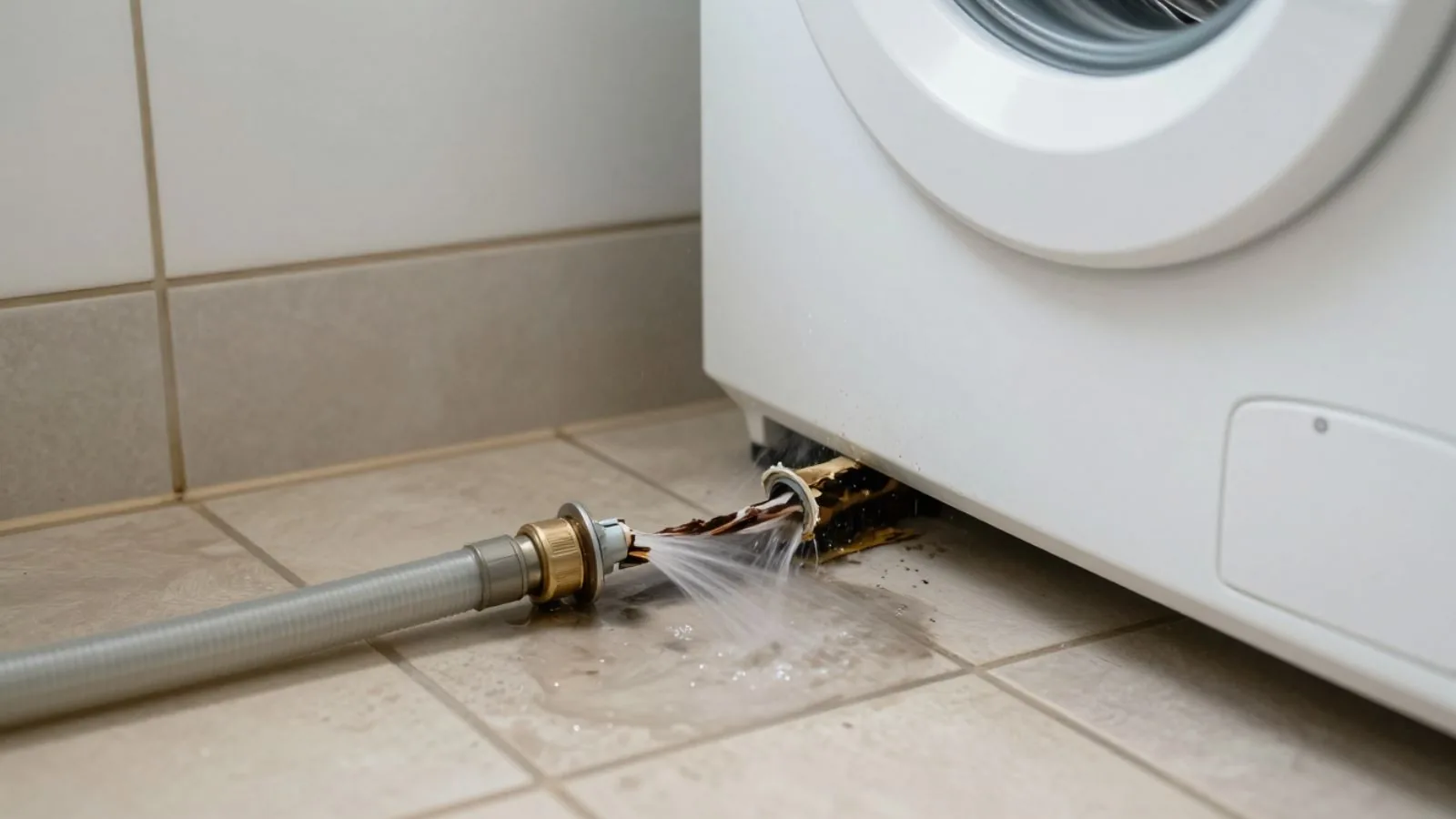
Appliance Leak Water Damage Cleanup in Sachse, TX
A washer hose or dishwasher line can leak while the house is empty. We find where the water went, dry the floor and the cabinet bases, and document the loss.
Most appliance leaks start small and end up larger than they look. A washer hose can work loose behind the machine, a dishwasher gasket can drip into the cabinet base and a refrigerator ice maker line can seep for weeks. By the time a floor looks wet, the water has often already gone under cabinets and into the subfloor.
This page covers leaks that begin inside an appliance or its connections. If the room is the bigger issue, such as wet cabinets and flooring around a sink, see our kitchen water damage repair page.
Where appliance leaks come from
Washers lose water through supply hoses, drain hoses and worn fittings. Dishwashers leak at the door gasket, the pump housing or the supply connection. Refrigerators leak through the ice maker line or the water filter housing. Water heaters and air handlers have their own pages because the damage pattern is different.
The Census Bureau counts about 84.7 percent of Sachse homes as owner-occupied. For most households the appliance, the supply line and the water damage that follows all belong to the person who lives there.
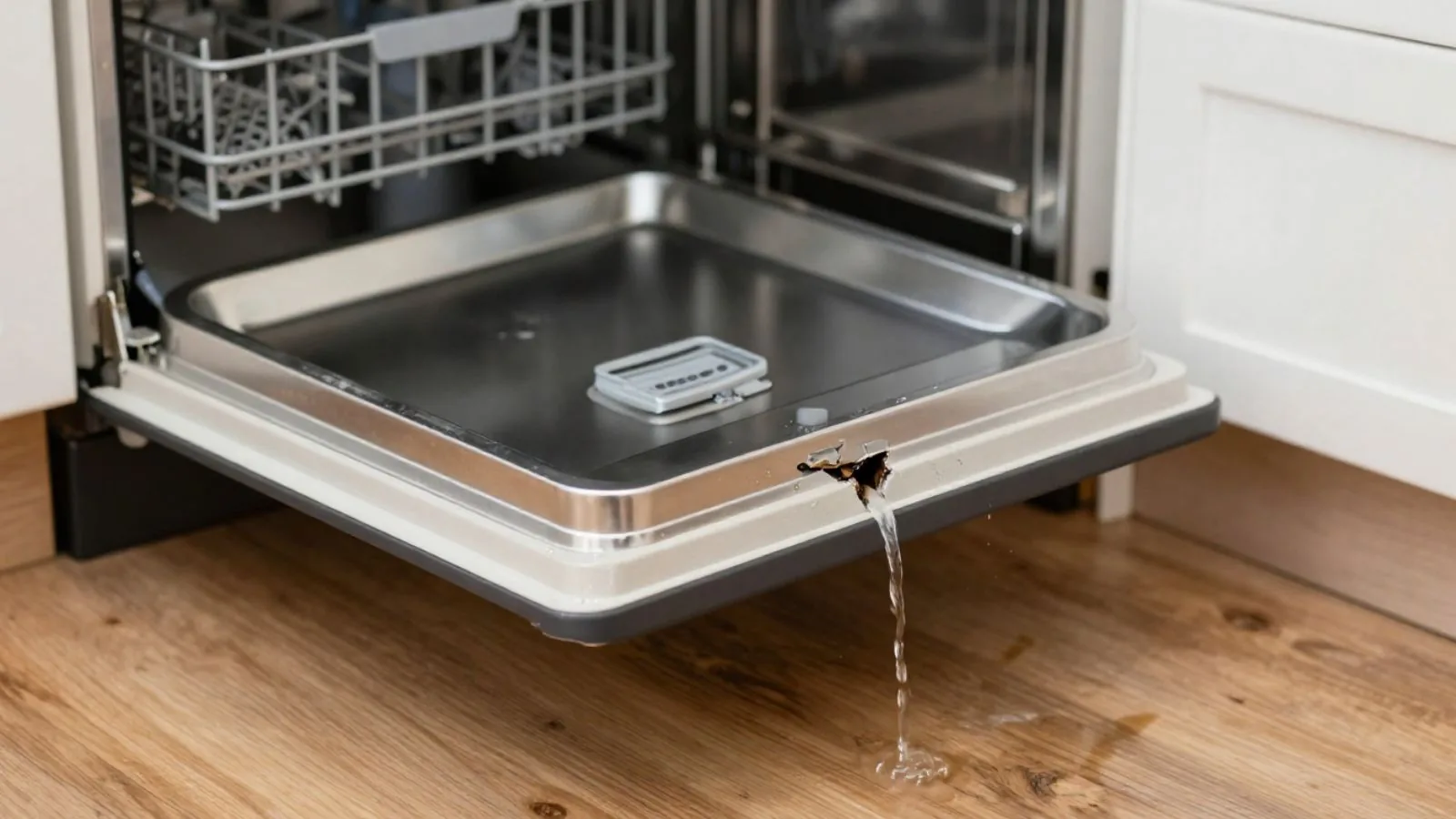
What you see and what it means
- A soft or swollen spot at the base of a cabinet. Water is wicking into particleboard.
- Cupped or lifting floor planks beside an appliance. Water got under the flooring.
- A musty smell near the laundry room. Moisture is trapped in a wall base or under flooring.
- A water stain on a wall behind a washer. A supply connection has been dripping.
- A higher water bill with no explanation. A hidden leak may be running.
First-hour safety steps
- Close the appliance's own water valve. It is usually on the wall behind or beside the unit.
- Unplug it only if the floor around the plug is dry. Otherwise leave the power alone and call the electric utility or 911 for electrical risk.
- Pull the appliance out only if you can do it without stepping into water.
- Soak up surface water with towels and lift rugs and boxes off the floor.
- Call our line before the water dries. Drying marks fade, but moisture remains.
- Photograph the hose, the appliance and the wet floor.
How we handle appliance leaks
The technician maps the water with moisture meters and a thermal imaging camera, then follows it under cabinets and along baseboards. Surface water is extracted with a portable unit. Toe kicks and baseboards are removed so air can reach the wet cavity.
Air movers and low-grain refrigerant dehumidifiers dry the area. Flooring and cabinet bases are checked for swelling, and materials that cannot recover are removed. Readings are logged each visit. The reference for the work is the ANSI/IICRC S500 water damage standard.
What changes the cost
The appliance location, how long it leaked, whether water got under cabinets or into a neighboring room, the flooring type and the number of drying days all change the scope. A tile floor on a slab dries more easily than engineered wood over a subfloor.
Scope and price are explained before any work begins.
Appliance leaks and your insurance
The Texas Department of Insurance says a standard homeowners policy generally covers sudden and accidental water damage and not gradual leaks. A hose that bursts is usually sudden. A seep that went unnoticed for weeks or months may be excluded.
Note the date you first saw the leak, keep the failed part and take photos before cleanup.
Mistakes to avoid
- Pushing the appliance back into place while the wall is wet. The leak stays hidden.
- Drying only the visible floor. Water in the cabinet base is the part that causes the damage later.
- Reusing a cracked or old hose. A new hose costs little next to a flooded floor.
- Ignoring a small damp patch. It tends to grow.
- Skipping a shutoff check. Many valves seize if they are never turned.
Where we work and what follows
Once readings are dry, water damage repair covers rebuilding the floor or cabinet base, and water mitigation explains the drying measurements. Crews serve Garland and Rowlett as well as Sachse ZIP 75048.
Frequently asked questions
Yes. Dispatch answers 24 hours a day, and a crew goes out the same day when one is available. No arrival time is promised because other jobs and road conditions change it.
Close the appliance's valve, keep power off in wet areas and call (972) 945-2885.
Washing machine supply hoses and drain lines, dishwasher supply and drain connections, refrigerator water lines and ice makers, and utility sink or laundry tub overflows.
Each one leaves water in a different place, so the technician starts with a map of where it traveled.
Treat it with care. Drain water from a washer or dishwasher carries soap, lint and food residue, and the industry water damage standard classes this kind of water as Category 2.
Wear gloves, keep children and pets away and let a technician decide what to discard.
In Sachse the city maintains water mains and service lines up to the meter. Everything beyond the meter, including the line to a washer or refrigerator, belongs to the homeowner.
Public Works at 972-495-7600 can help with meter and main questions during business hours.
A burst hose or a sudden failure is often treated as sudden and accidental by Texas insurers, according to the Texas Department of Insurance. A slow drip that ran for months is more often called gradual and excluded.
Photographs and the age of the appliance help show which one it was.
Water spreading right now? Call the 24/7 line
A restoration crew can be sent to Sachse and nearby towns around the clock. Tell dispatch what happened and what you can see.
☎ Call (972) 945-2885